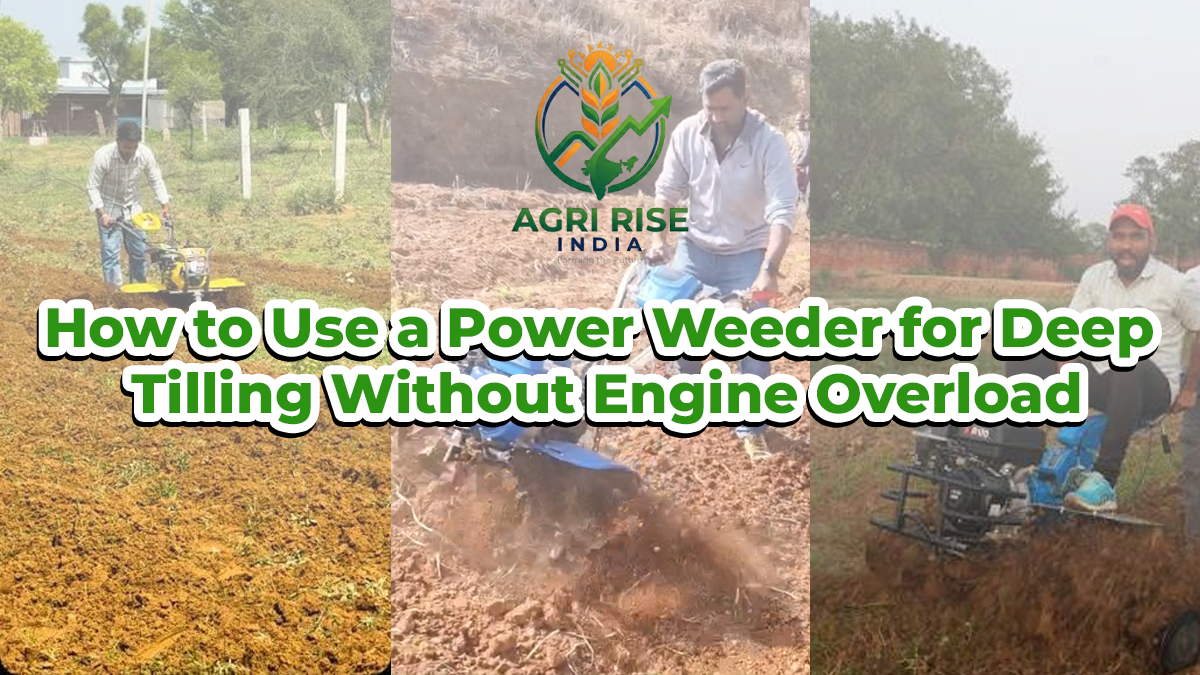
Deep tilling is a key farming practice which contributes to soil improvement, water retention, and proper root development. The Power Weeder can undertake this function efficiently, but this would only be possible if the machine is used properly. Most farmers try to till at maximum depth in a single process; however, this puts too much strain on the engine.
Overloading the engine causes higher fuel consumption and faster degradation of essential engine parts such as the transmission. With the correct technique of use, farmers can do deep tilling without compromising the efficiency and durability of their Power Weeder Machine.
Understand the Soil Before Starting
It is necessary to evaluate the state of the soil prior to commencing with the field activities.
If the soil is excessively dry, compacted, and has many stones and roots, the machine will need to do much more effort. In such situations, trying to cultivate deep right away can lead to overloading the engine.
In case of highly compacted soils, it is recommended first to break the upper layer and then to progressively deepen the cultivation with each pass.
Keep a Constant Engine Speed
Engine speed is critical when it comes to the performance of machinery.
Constantly running the Power Weeder at full throttle will not necessarily increase the level of efficiency. Rather, high engine speed results in overheating and wastage of fuel.
It is imperative to maintain a constant engine speed relative to the condition of the soil and the depth of cultivation.
Checking Blade Conditions Before Going for Field Operation
It is very important to have an idea about the conditions of blades in a Cultivator Machine.
The blades which are worn out, broken or bent will require extra power from the engine to cut into the ground, and this will affect the performance of the machine.
Make sure that you check the blade assembly each time before the operation.
Monitor Engine Oil
A good engine is very efficient when working in tough field conditions. Before starting your activities, it is necessary to check the engine oil and air filters. Lack of engine oil causes high internal friction, and dirty air filters limit the amount of air, hence low efficiency in combustion.
The engine can operate steadily during deep tillage thanks to effective lubrication and proper air flow.
Avoid Working in Extremely Dry Soil
Dry and hardened soil naturally creates greater resistance against the rotating blades.
If possible, perform tilling when the soil contains moderate moisture. Light irrigation before cultivation can soften compacted soil, allowing the Power Weeder Machine to penetrate more easily while reducing engine workload.
This practice also improves soil pulverisation and reduces wear on the blades.
Do Not Overload the Machine
Each Power Weeder comes with a designed operating capacity.
If the operator works above these limitations by either increasing depth or adding wrong accessories, then he puts more pressure on the engine, transmission, and blade assembly.
Working within the recommended limits increases the machine’s efficiency and extends its lifespan.
Follow a Regular Maintenance Schedule
Routine maintenance is very critical in ensuring that the engine does not get overloaded.
Maintenance of the engine oil, spark plug, transmission, blade assembly, and control cables enables the machinery to operate effectively through the entire agricultural season.
Overlooking maintenance needs usually leads to poor engine performance, increased fuel usage, and additional maintenance costs.
Best Practices for Efficient Deep Tilling
Farmers can improve cultivation efficiency by following these simple practices:
- Inspect the field before starting operations.
- Increase tilling depth gradually instead of working too deep in one pass.
- Operate the machine at a consistent engine speed.
- Keep the blades sharp and properly installed.
- Check engine oil and clean the air filter regularly.
- Avoid cultivating extremely dry or rocky fields without preparation.
- Perform routine servicing according to the maintenance schedule.
These preventive measures improve the performance of your Power Tiller Machine, Mini Power Tiller, Agriculture Tiller, Farm Tiller, Mini Cultivator, and other Agriculture Equipment while reducing engine stress.
Final Thoughts
Deep cultivation is important in ensuring good soil conditions; however, the operation must never be done at the expense of the engine performance. The vast majority of engine overloading cases are caused by improper operation of the equipment rather than malfunction.
Knowing the soil condition, setting the proper depth of tillage, regular maintenance of the equipment, and operation of the Power Weeder at the appropriate level will enable a farmer to get good soil preparation while ensuring long life of the Agriculture Machinery. Proper operation will save the engine as well as ensure good field performance and reduce operational expenses.
Read More: Polyhouse Farming: सर्दियों में सब्जियों की देखभाल और प्रबंधन कैसे करें?